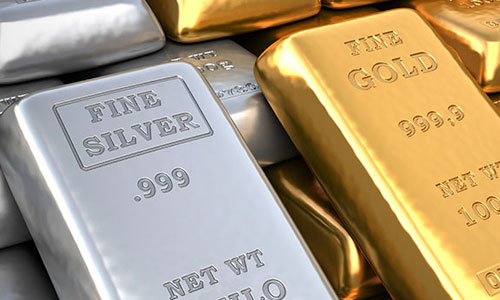
Gold has been an essential barometer in terms of global economic and political sentiment throughout history. The precious metal has held an eternally impressive grip on the human psyche, from the Queen of Sheba’s gift of gold to King Solomon, to the Californian gold rush. Its symbol of power, wealth, and permanence endure to this day as different themes such as central bank buying, and inflation rear their heads.
Times of stress also make gold attractive, and it is volatility in today’s markets which keeps gold bugs attentive to potential trading opportunities.
We look at the main drivers for gold as an asset class and then dive into price action over the last decade to discover some of the recent fundamental and technical reasons moving the yellow metal.
Gold as an asset class
Gold’s pedigree as a store of value goes back a thousand years. It is perceived as the ultimate object of wealth, and also of monetary accumulation. With this history of utility in currency and as physical jewellery, gold’s status as a favoured haven asset and means of diversification endures.
- Safe Haven. For market participants, gold has a tendency to retain or rise in value during periods of turbulence and volatility. It is considered a rather stable asset, so has historically increased in price in periods of turmoil. A prime example of this was the rise during the global pandemic in 2020 when buyers pushed prices to record highs at $2,075.[2]
- Inflation hedge. Gold is also an attractive asset in times of broad, general price pressures. Inflation means a reduction in the buying power of paper currencies, including how much gold can be bought for a given amount of paper currency. The metal is a proven long-term hedge against inflation as it protects purchasing power against potentially excessive asset price inflation and currency debasement.
On the flip side, less risky times see the demand for the precious metal generally fall. There are potentially alternative, albeit risky areas of the market which become more viable.
Gold’s relationship with the dollar
A key driver for gold prices is its relationship with the US dollar. The greenback remains the benchmark pricing mechanism as the metal is dollar denominated. When the value of the dollar rises, gold becomes more expensive for other countries’ currencies to purchase. This causes demand to fall and the price of the precious metal drops.
Generally, gold and the dollar have an inverse correlation. A weaker dollar is likely to push the price of gold higher through rising demand. This is because more gold can be purchased when the dollar moves lower.
While other factors like supply and demand, and central bank buying are important in driving the price of gold, the dollar, linked to inflation and interest rates, is seen as a key driver.
Price movement of gold over the last 10 years
A key driver for gold prices is its relationship with the US dollar. The greenback remains the benchmark pricing mechanism as the metal is dollar denominated. When the value of the dollar rises, gold becomes more expensive for other countries’ currencies to purchase. This causes demand to fall and the price of the precious metal drops.
Generally, gold and the dollar have an inverse correlation. A weaker dollar is likely to push the price of gold higher through rising demand. This is because more gold can be purchased when the dollar moves lower.
While other factors like supply and demand, and central bank buying are important in driving the price of gold, the dollar, linked to inflation and interest rates, is seen as a key driver.
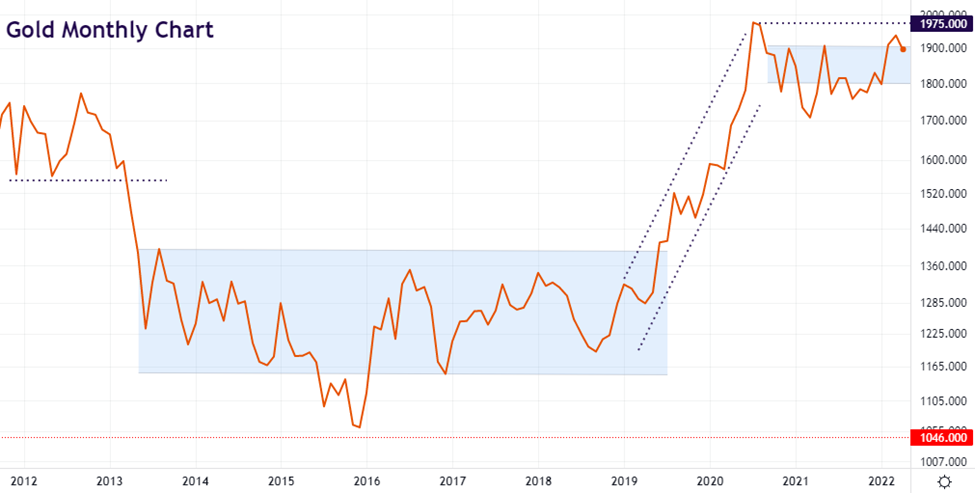
After the GFC in 2008 and the eurozone debt crisis in the early noughties, gold prices have remained above $1,000 for over a decade. These two historic risk events saw investment demand for gold rise as it was increasingly used as a hedging tool.
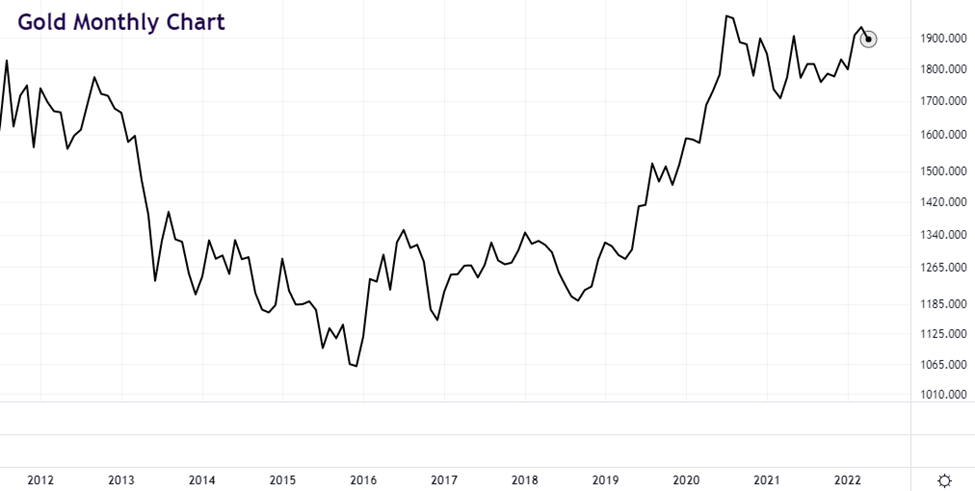
Prices remained high in 2012 on rising inflation, QE stimulus and major central banks looking to diversify their asset bases. Having broken down through support above $1,550 in 2013, gold bugs were hit by a strong dollar in 2014. The shiny metal fell to $1,046 in late December 2015 as inflation dropped to 0.1%.
Gold prices consolidated in the middle part of the decade between $1,122 and $1,375. Inflation picked up but the dollar appreciated as well. An upside breakout took place in 2016. The US-China trade war, other geopolitical issues and more central bank demand saw a bullish ascending channel develop.
This culminated in a new record high at $2,075 during the Covid-19 pandemic crisis in August 2020. Recessionary fears and monetary and fiscal stimulus boosted prices. The market then consolidated above $1,800 last year, before spiking up to $2,070 during March 2022. Near-term significant levels include the June 2021 top at $1,916 and the November 2021 high at $1,877. Elevated inflation may have a dampening effect on “real” interest rates. Whether we see market rates far above inflation rates remains to be seen.