In the ever-evolving tapestry of the financial markets, short-term trading stands out as a whirlwind of rapid choices and prompt actions. This style of trading, defined by its penchant for quick turnarounds, is akin to a high-stakes game of chess, where every move counts and the clock is perpetually ticking. Those who venture into this realm are not just traders; they're agile decision-makers looking to harness the ephemerality of market shifts, turning brief moments into lucrative opportunities.
As we delve deeper into this article, our mission is to illuminate the multifaceted world of short-term trading analysis. Whether you're a trading veteran aiming to hone your acumen or a novice eager to comprehend the intricate dance of numbers, our guide offers a comprehensive look into the methodologies, instruments, and tactics that can elevate your analytical prowess.
Short-term trading, though exhilarating, comes with its unique basket of risks and rewards. The mercurial nature of volatility can either propel profits or plunge portfolios, and mastering this environment requires an astute blend of speed, discernment, and precision. Together, let's demystify the core components that underpin successful short-term trading analysis, arming you with the tools and wisdom to traverse this volatile terrain with confidence and agility.
Deep Dive into Multi-Temporal Chart Analysis
In the realm of market analysis, a holistic approach entails diving into multiple layers of time frames on charts. Restricting your focus to just one segment of the time spectrum can lead to tunnel vision, possibly leaving significant opportunities in the blind spot. Broadening the lens to encapsulate both longer and shorter durations affords a panoramic view, revealing insights that single-frame scrutiny might obscure. On the flip side, getting overly engrossed in extensive time frames can make you oblivious to granular details and transient opportunities. Thus, a balanced examination across diverse durations not only enriches comprehension of market trajectories but also fortifies decision-making with data-driven insights.
To illustrate, let's consider the task of scrutinizing a stock chart. A multifaceted approach would involve analysis at intervals such as 30 minutes, 2 hours, and 4 hours. For those leaning towards the short-term side, leveraging tools like the Simple Moving Average (SMA) and the Relative Strength Index (RSI) can yield insights into the stock's current momentum. Navigating through these varied intervals can pinpoint optimal entry junctures, strategically positioning you to harness the wave until warning signs of a bearish pivot emerge.
Deciphering the Language of Chart Patterns
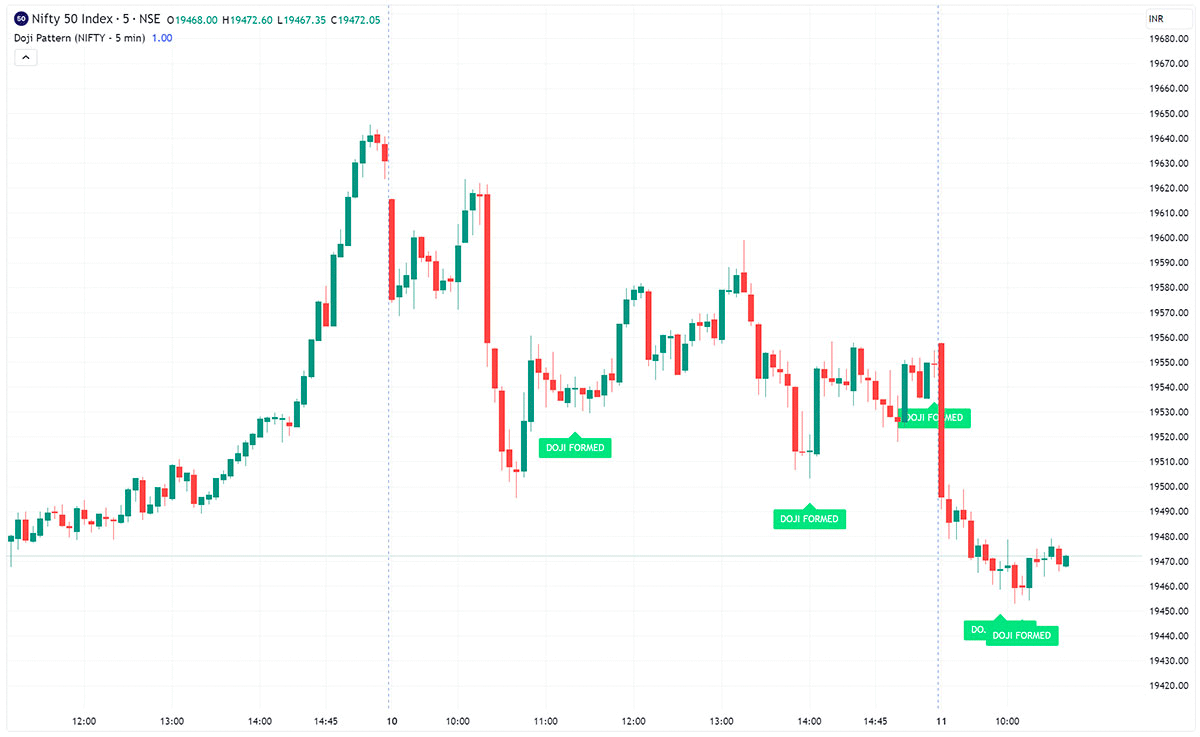
Technical analysis is much akin to decoding a visual language. Patterns painted across charts narrate stories of market movements. Maintaining an unwavering watch for pivotal market junctures—be it ascents, descents, or lateral drifts—is quintessential for any trader aiming for success. Any adept trader will echo the importance of being fluent in both reversal and continuation patterns often etched on candlestick charts.
Though it's paramount to juxtapose these patterns with supplementary indicators or analytical modalities for validation, they often serve as windows peering into the overarching market sentiments and anticipated trajectories.
Crafting Precision with Tailored Indicators
As traders journey through the complex tapestry of market dynamics, fine-tuning indicators becomes a linchpin to constructing a robust trading strategy. A frequent query echoes across trading floors: "How should I calibrate my settings?" The granularity of these settings holds the answer. Opt for tighter settings, and your indicator becomes hyper-responsive, capturing even slight market fluctuations. In contrast, expansive settings render the indicator more reticent, offering signals that, while more precise, aren't infallible. Drawing from the well-known RSI (Relative Strength Index) indicator, conventional benchmarks often revolve around 70/30 or 80/20. However, it's vital to note that broad-based settings may result in indicators lagging, potentially making them out of sync with real-time market shifts.
The essence of success resides in fine-tuning these indicators so that they resonate harmoniously with your distinct trading ethos and objectives.
Meticulous Choices in a Fast-Paced Arena
Navigating the high-octane realm of short-term trading necessitates lightning-quick decision-making. Those dealing with rapid contract turnovers find themselves in an environment where every second counts. Paralysis by analysis becomes a looming threat; over-scrutinizing data can sometimes cripple swift judgments, rendering potentially lucrative opportunities missed and profits lost to the winds of time. Navigating this arena with precision necessitates a proactive stance, foreseeing market swells and tides, while sidestepping rash, uncalculated choices.
The blueprint for short-term trading diverges considerably from its long-term counterpart. To truly optimize your short-term market evaluations, one must delve deep into the intricate dance of candlestick patterns, adjusting indicators with precision. Speed and accuracy fuse in this world, making the mastery of swift, yet informed decision-making not just a trait but a cornerstone for success in short-term trading.
Concluding Insights on the Short-Term Trading Arena
Navigating the tumultuous waters of short-term trading is akin to a high-adrenaline dance, demanding agility, nimbleness, and pinpoint precision. Throughout this exploration, we have journeyed through a myriad of tactics, illuminating pathways to refine your short-term trading acumen, catering to both the veterans and the novices. The short-term trading landscape is riddled with a tapestry of challenges and potential windfalls, perpetually shaped and reshaped by the capricious nature of market volatility. To truly thrive, traders must harness their capacity for rapid data assimilation, trend spotting, and decisive action. With the insights gathered herein, you're poised to weave through the intricate maze of short-term trading, making split-second, yet deeply informed, choices.
A few critical touchstones for mastery include: a keen eye for varying chart time scales, an in-depth understanding of chart topographies, and the adeptness to tailor indicators to mirror your individual trading persona. In this ephemeral world of short-term trading, where fortunes can shift in mere moments, swift, yet calculated, decision-making becomes the bedrock of success.
As we conclude this illuminating dive, remember that this article is not just a resource, but a compass, directing you towards trading excellence. Commit to your craft, engage in consistent practice, and set forth on a lucrative odyssey within the dynamic realms of finance.